Australia's First Open-Access Quantum Computing Testbed Opens at SQD Lab
On 19 August 2026, the Superconducting Quantum Devices (SQD) Lab at the University of Queensland celebrated the official opening of the National Quantum Computing Testbed (NQCT), marking a major milestone for quantum computing research and development in Australia.
The opening, held during National Science Week, brought together representatives from government, academia and industry. Among the distinguished guests were the Honourable Andrew Powell MP, Queensland Minister for Science and Innovation, UQ Vice-Chancellor and President Professor Deborah Terry, and Johann Kruse, NVIDIA's Director of Strategic AI Partnerships.
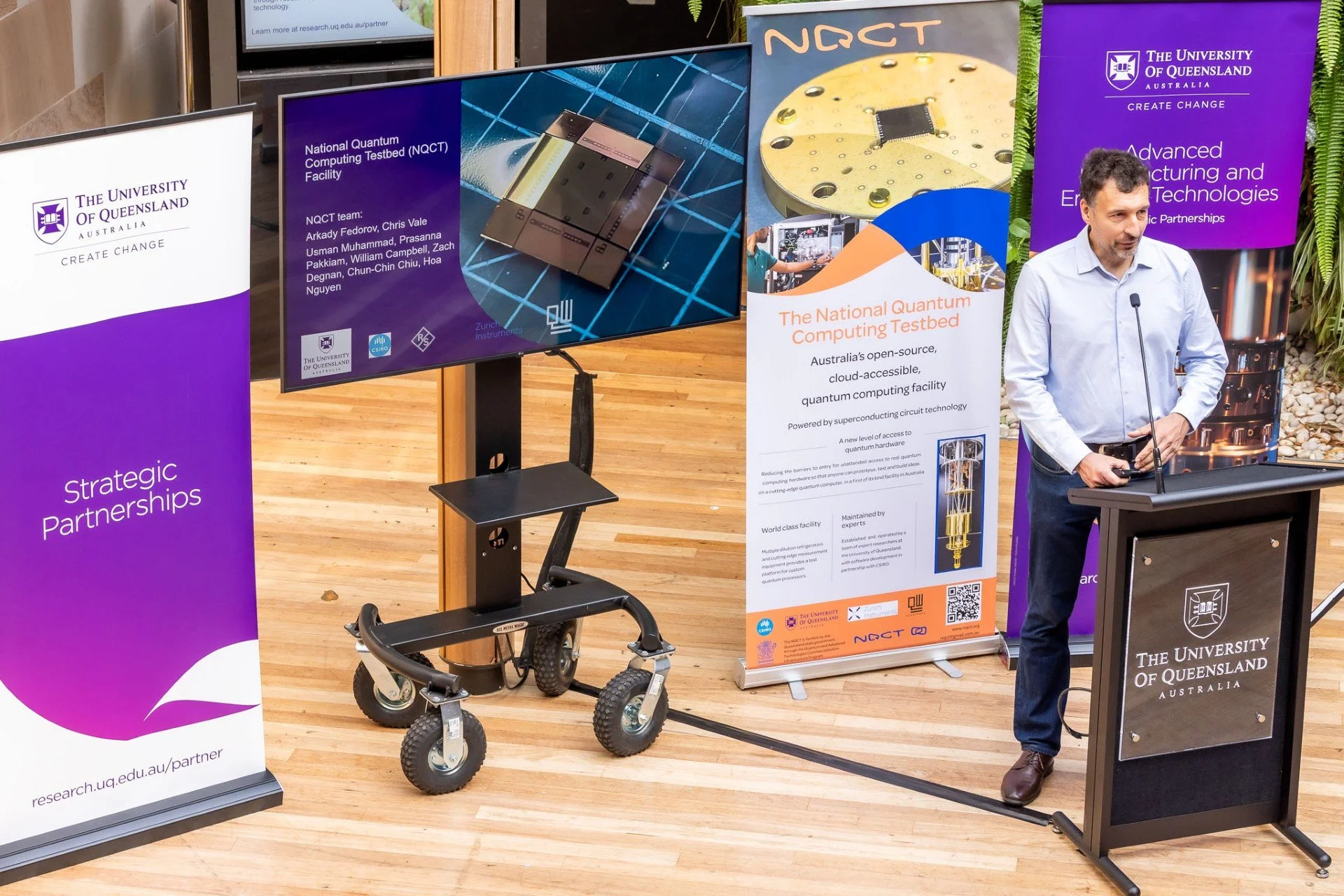
Figure 1. Professor Arkady Fedorov addresses guests at the official opening of the National Quantum Computing Testbed (NQCT) at the University of Queensland.
Minister Powell officially opened the facility and became its first official user, while representatives from NVIDIA and the wider quantum community highlighted the importance of accessible quantum computing infrastructure for Australian research and innovation.
Hosted at SQD Lab, the $10.8 million facility is Australia's first open-access quantum computing hardware testbed. It provides researchers, students, startups and industry partners with the opportunity to develop and test their own quantum programs on real superconducting quantum processors.
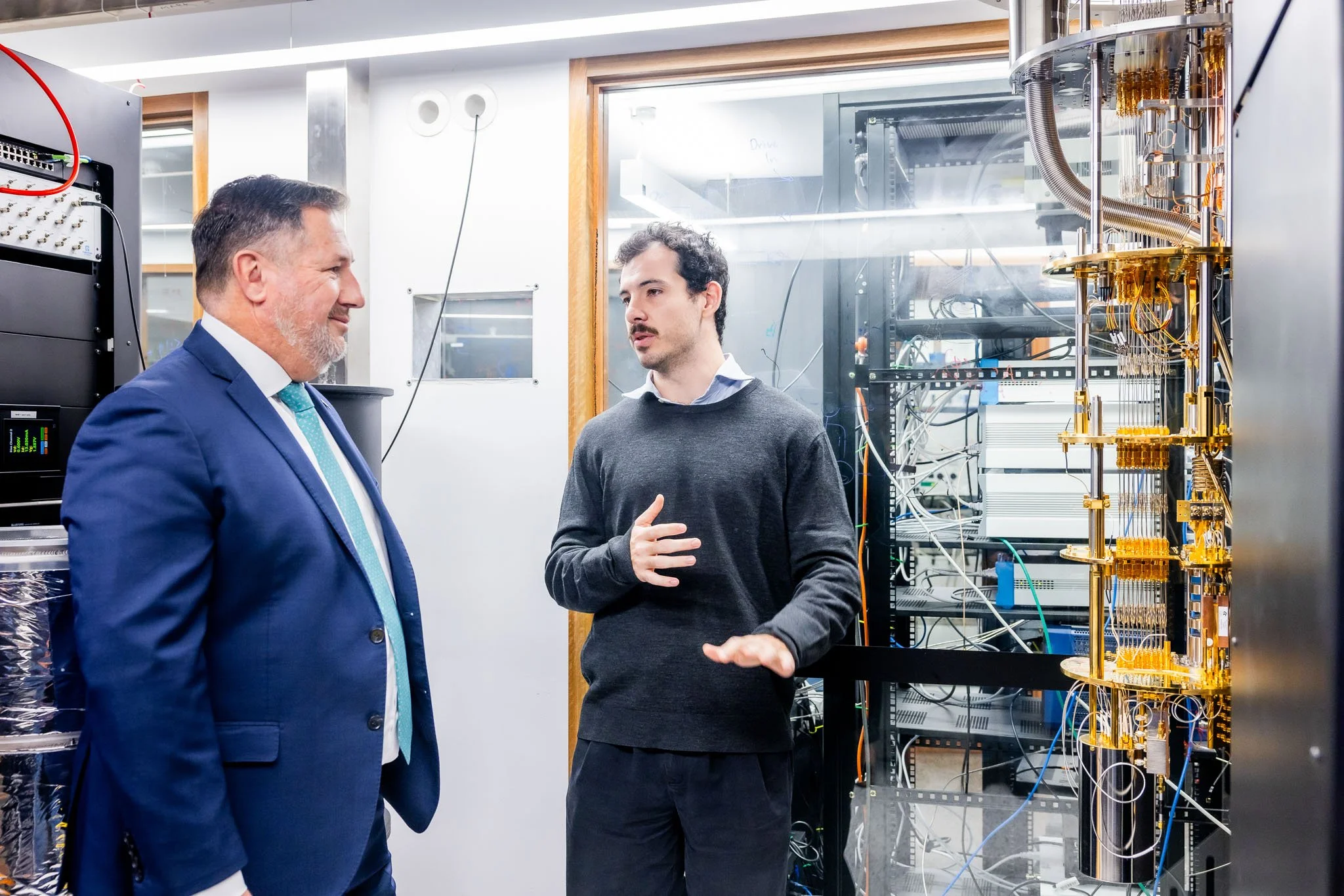
Figure 2. Postdoctoral researcher Dr William Campbell discusses the testbed's superconducting quantum computing hardware with Queensland Minister for Science and Innovation, the Hon. Andrew Powell MP.
The testbed currently features five-qubit superconducting quantum chips, operated at temperatures close to absolute zero using dilution refrigerators. Unlike conventional commercial quantum computing services, the NQCT is designed to provide users with greater access to the underlying hardware, including low-level quantum control and measurement capabilities. This will enable experiments spanning quantum algorithms, device characterisation, quantum control and error correction.
Importantly, the facility is already moving beyond its launch phase, with an initial group of users beginning work on the platform. As the testbed develops, its capabilities will continue to expand, providing opportunities for increasingly sophisticated quantum experiments and hardware development.
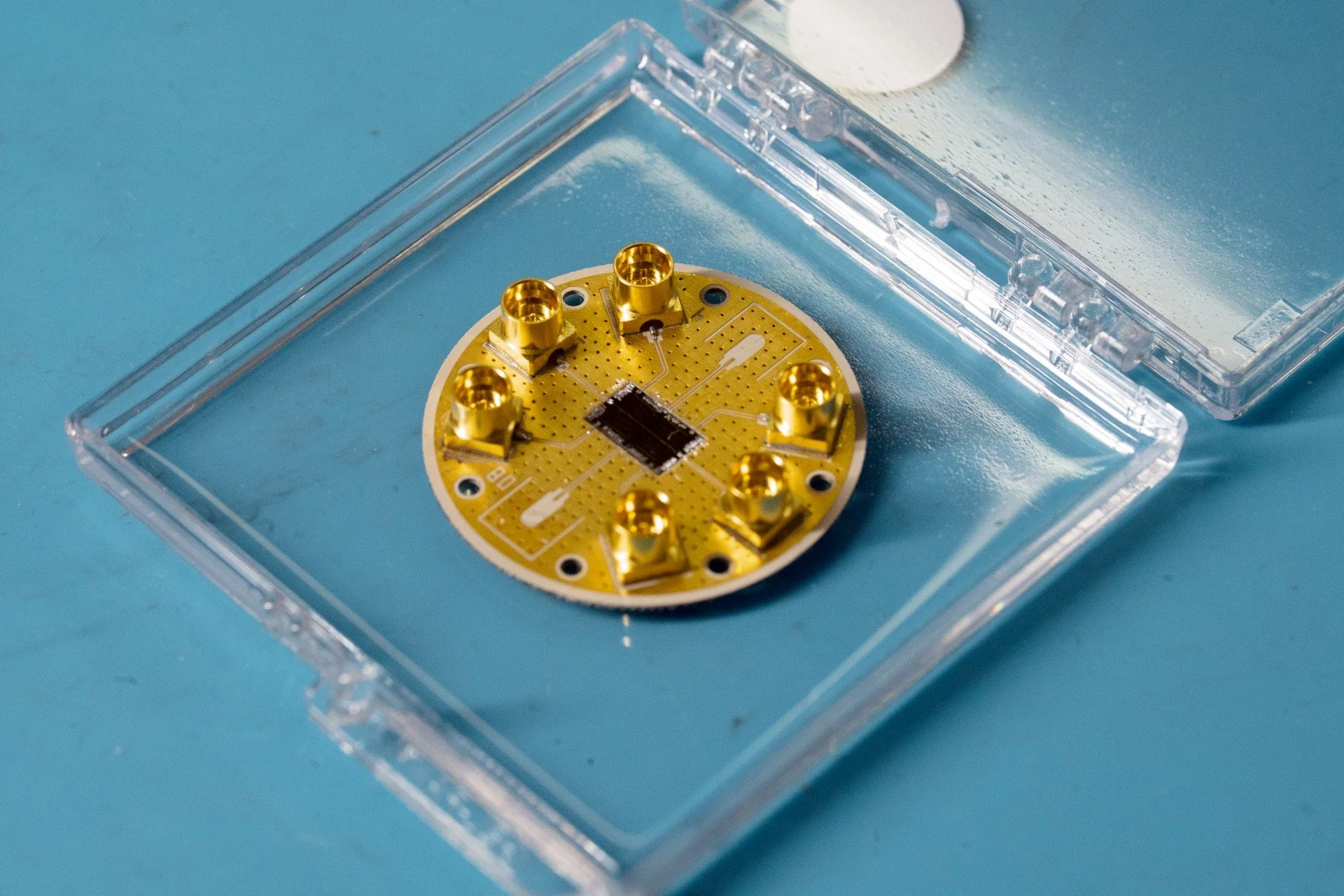
Figure 3. A five-qubit superconducting quantum processor mounted on a printed circuit board (PCB), forming part of the quantum computing hardware available through the NQCT.
The NQCT is supported by the Queensland Government through the Quantum and Advanced Technologies Commercialisation Infrastructure Program. The project brings together the University of Queensland and CSIRO, with contributions from industry partners QuantWare, Zurich Instruments and Rohde & Schwarz.
For SQD Lab, hosting the NQCT represents an important expansion of our research capabilities and an opportunity to make superconducting quantum computing hardware accessible to a much broader community.
With the facility now operational and its first users getting started, the NQCT is taking an important step towards turning new ideas in quantum computing into experimentally demonstrated results.
For more information about the facility and how to request access, visit the National Quantum Computing Testbed website.
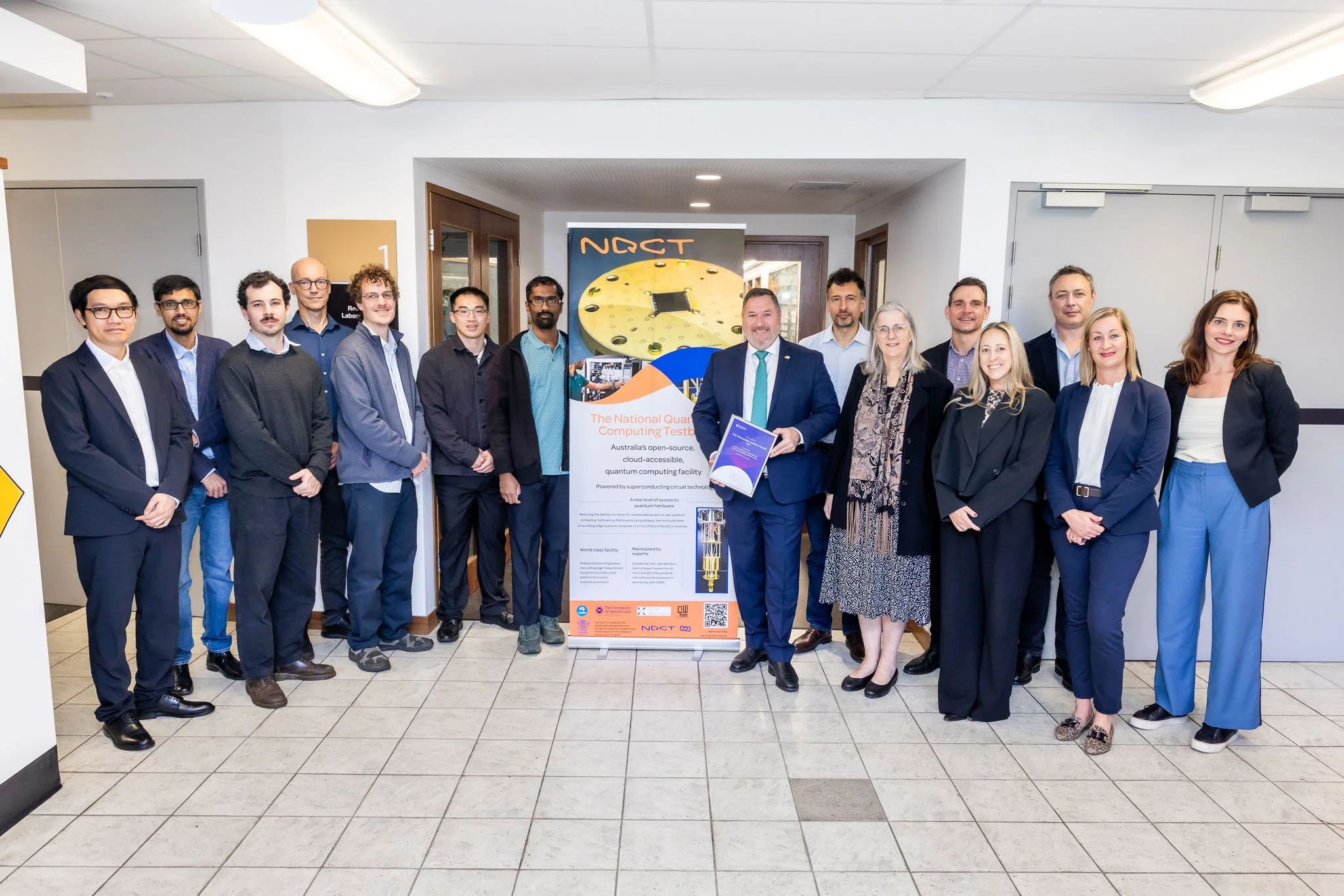
Figure 4. Members of the NQCT team alongside Queensland Minister for Science and Innovation Andrew Powell MP, NVIDIA representative Johann Kruse, and other university and industry representatives at the official opening.